
If a path becomes slippery again soon after cleaning, the useful question is what keeps making it wet or contaminated. Shade, leaf buildup, irrigation, a low area and the surface finish can all affect the investigation. Another wash may be part of the answer, but it should not be the only question asked. This guide helps you document the pattern, protect access and brief the right contractor without testing the path by deliberately walking on a dangerous patch.
Make access the first decision
Keep people away from a visibly slippery area and use another route where one is safely available. Do not demonstrate how slippery it is by sliding a shoe or walking across it for a photograph. Take pictures from firm ground. If the path is the only practical entrance, explain that immediately when arranging help. A cleaning date is less useful if nobody has considered how the household will get in and out while work takes place.
Think about the people who use the route, including visitors carrying parcels, someone using a walking aid and children running between the house and garden. Tell the contractor about steps, handrails and narrow gates. Temporary arrangements need to be stable and suitable for those users. An unsecured mat over a wet patch can introduce another problem, so do not treat it as a universal solution.
Separate urgency from the method. You may need prompt advice because access is difficult, but that does not prove high-pressure washing is suitable. Share the surface type and visible condition first. If there are loose pavers, broken steps or other defects, those may need assessment before a cosmetic clean is arranged.
Observe when the wet patch appears
Record the time and weather when you notice the problem, without going onto the affected area. Does it follow rain, irrigation, use of an outdoor tap or a particular household activity? Does it dry along with the rest of the path, or remain dark after nearby areas have dried? A few well-labelled observations can show more than a single photograph taken immediately after the entire garden has been watered.
Map the boundary of the wet area on a simple sketch. Note whether it begins at a garden bed, a downpipe, a step or a wall. Water reaching the path from somewhere else may need attention at its source. A patch confined to a depression raises a different question. Avoid assuming that the visible low point is the only problem; the route water takes to reach it may matter too.
For a Pakenham property with both open paving and a narrow side passage, compare those zones separately. Their exposure and use can differ within a few metres. There is no need to assign the whole suburb a single cleaning interval when your own observations can identify the section that stays troublesome.
Separate contamination from surface and level problems
Loose leaves, tracked mud and visible surface growth are different from a smooth finish that remains difficult to use when wet. Cleaning may reduce contamination without making the surface appropriate for every condition. Do not use a clean appearance as proof of slip performance. If the path still feels unsafe during normal use after cleaning, stop using the affected route and ask for a surface assessment rather than requesting more pressure automatically.
Look for raised edges, rocking units and steps that are hard to distinguish from the surrounding paving. Those issues are outside ordinary washing. Tell the assessor whether the problem is slipperiness, a trip edge or both. A paving contractor may need to consider levels and support, while a cleaner addresses dirt on sound material. Clear descriptions help avoid receiving a quote for only the easiest visible part of the problem.
Existing sealers or coatings can also change the question. Find their product names if possible and note when the path was last treated. Do not apply another sealer or a textured coating as an improvised fix before compatibility and suitability have been assessed. The next product needs to suit the actual surface and intended use.
| What you notice | Useful next step | Avoid |
|---|---|---|
| Leaves and dirt collect in a shaded strip | Plan suitable cleaning and regular debris removal | Assuming appearance proves safe footing |
| Water persists in one depression | Request paving or drainage assessment | Expecting washing to change the levels |
| Clean surface remains troublesome when wet | Ask for surface suitability assessment | Adding an unidentified sealer |
| Loose units or raised edges | Arrange repair assessment | Covering defects with an unsecured mat |
Trace practical water sources without dismantling anything
Observe irrigation from a safe dry area and note whether spray reaches the path. Look for an outdoor tap that drips, a hose left draining or overflow from a container. Simple visible sources are worth recording before assuming a buried drainage fault. Do not disconnect pipework or open electrical irrigation controls to investigate. Repairs should be handled by the appropriate person for the equipment involved.
At garden borders, photograph soil or mulch that regularly spills across the paving. If material is banked against the path, discuss the edge arrangement with a landscaper rather than repeatedly washing it back into the bed. The cleaning brief should identify where debris originates and how it will be collected. Moving the same mud from one side of the path to the other leaves the recurrence unresolved.
If water appears to run towards the house or collect near a doorway, flag that separately. Do not direct a hose into the area to create a dramatic demonstration. Photograph the natural wet-weather pattern and ask for a drainage assessment. The cleaner needs to know about that vulnerability before rinsing, even if the final repair will be done by someone else.
Choose a cleaning scope that allows inspection afterwards
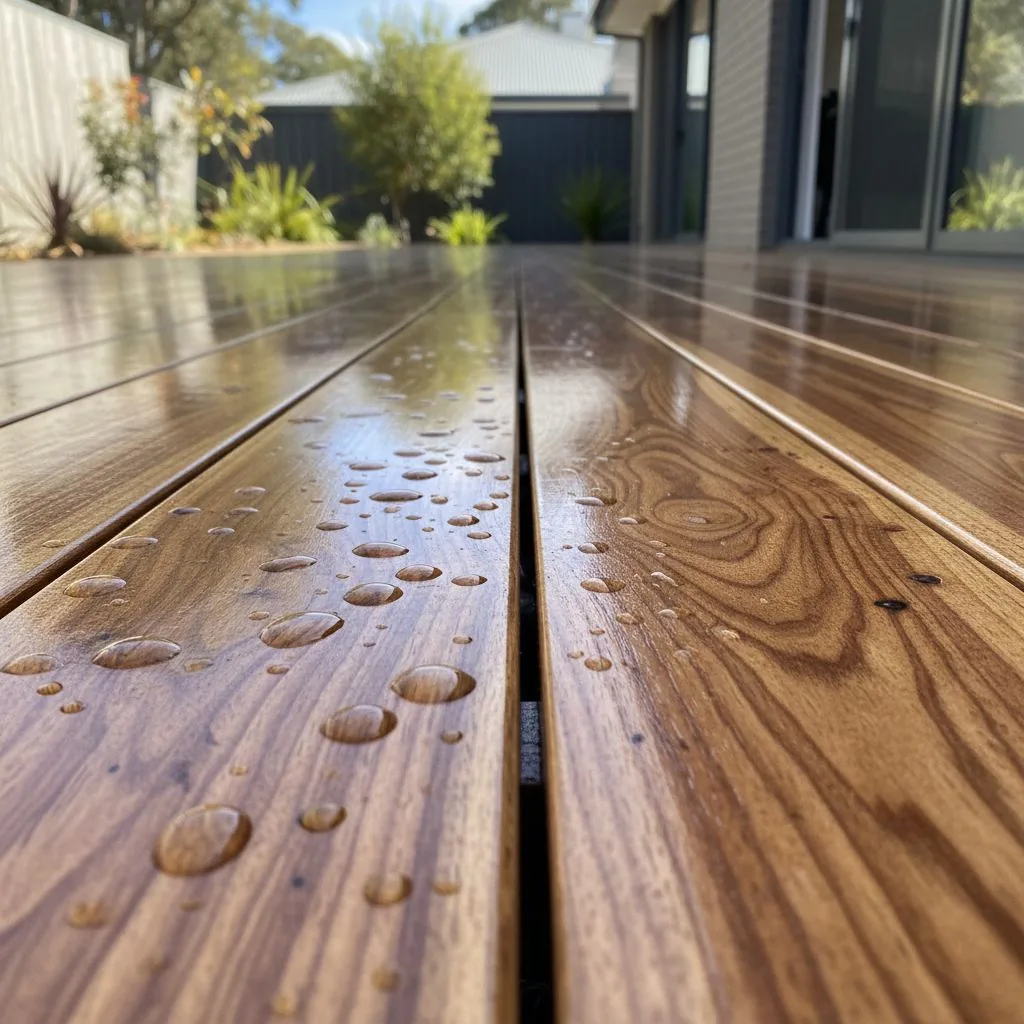
Identify the material and any finish before selecting a method. Concrete, pavers, tiles and timber are not interchangeable. Ask for a representative test on a sound area and review it after drying. Include the margins beside walls and garden beds if they are part of the problem. A narrow bright stripe through the centre may look better while leaving the slippery edge that people still have to cross.
Agree how access will be managed while surfaces are wet and while any product instructions restrict use. Keep children and pets away from the work zone. Ask where hoses will run and how the contractor will leave the path at the end of the visit. A surface can be cleaner while equipment or residue still obstructs the route, so the handover should cover the whole access path.
Do not describe cleaning as a certified slip treatment unless a separate assessment supports that claim. For a homeowner, the practical request is to remove suitable contamination, identify remaining concerns and explain next steps. If a different surface finish is being considered, seek appropriate product and installation advice rather than treating it as an automatic add-on to the wash.
Hypothetical example: a side path wet beside the tap
Imagine a Pakenham side path used every day to take bins to the street. A dark patch beside the outdoor tap returns after each clean. The owner records that it remains wet on days without rain, while the far end of the path dries normally. There are also leaves trapped behind a storage box. These observations suggest investigating the tap area and debris rather than setting a shorter whole-path cleaning schedule.
The owner arranges attention to the visible water source and moves the storage box where safe. A cleaning assessment then checks the paving and joints before selecting a method. The written scope includes the dark margin against the wall and describes how the household will access the bins while work is underway. Any uneven paving is marked for separate assessment rather than included under a general washing promise.
After the clean, the owner photographs the dry path and checks it after ordinary wet weather from a safe location. If the same patch stays wet despite addressing the tap, the next discussion concerns drainage or levels. The sequence avoids assuming either that cleaning must solve everything or that the first unsuccessful maintenance attempt proves the entire path needs replacement.
Make follow-up observations useful
Keep a short record with three columns: what happened, where the path stayed wet and what had changed nearby. Examples include irrigation running, leaf fall, a moved planter or a repaired tap. The purpose is to identify a repeatable pattern, not to create a daily inspection burden. Photograph only when there is a meaningful change and use the same viewpoint so the difference can be understood.
Do not check improvement by deliberately testing traction with your feet. Visual observations about moisture and contamination are enough for the record. If ordinary use still raises a safety concern, avoid the area and ask for an assessment. A contractor considering surface suitability will need information beyond a phone photograph, so be clear about what you have observed and what remains uncertain.
Review whether routine debris removal reaches the troublesome edges. Leaves behind bins, beneath pots and along a fence can remain unnoticed even when the main walkway is swept. Adjust practical maintenance around those locations if safe. Keep any product-specific care requirements with the record, especially if the path has a coating that limits which cleaners can be used later.
Give each contractor a specific question
For a cleaner, ask whether the surface contamination can be removed safely and what condition will remain afterwards. For a paving contractor, ask about movement, low points or unstable units. For a drainage assessment, show where water appears and where it travels. These questions can overlap, but naming them helps prevent an enquiry being reduced to a generic square-metre washing quote.
Include the path width, approximate length, material if known and whether it is the only entrance. Add photographs of both the problem area and the whole access route. A narrow gate or steps may influence equipment and water collection. State any immediate access concern without making assumptions about appointment availability; the contractor can then explain whether an inspection or another trade is needed first.
The brief builder below turns your observations into a short set of discussion points. Download it before making a call and add dates to the photographs you share. Keep cleaning, repair and drainage actions separate in the final scope, with a named owner for each. That makes it possible to judge whether the reason the path keeps becoming slippery has actually been addressed.